

When choosing accommodation with meals included in Barú, first ask which meals are covered and how the kitchen works. “Food included” might mean a day-trip lunch or meals throughout an overnight stay; these are different arrangements. It also helps to separate accommodation from the cost of feeding adults and children.
At a house reached by boat, deciding before travel prevents carrying unnecessary shopping or arriving without ingredients you expected to cook. Check arrival and departure times, provide ages and dietary requirements, and request an actual service sequence. You can then compare complete visits rather than a broad phrase in a listing.
What is on our table?
We serve Caribbean food prepared at the house. One lunch example is fried fish with coconut rice, patacones and salad. Our menu also includes grilled chicken with potatoes, pasta with shrimp, garlic shrimp and other fish and seafood preparations. We agree the menu before the visit according to what can be arranged for your party.
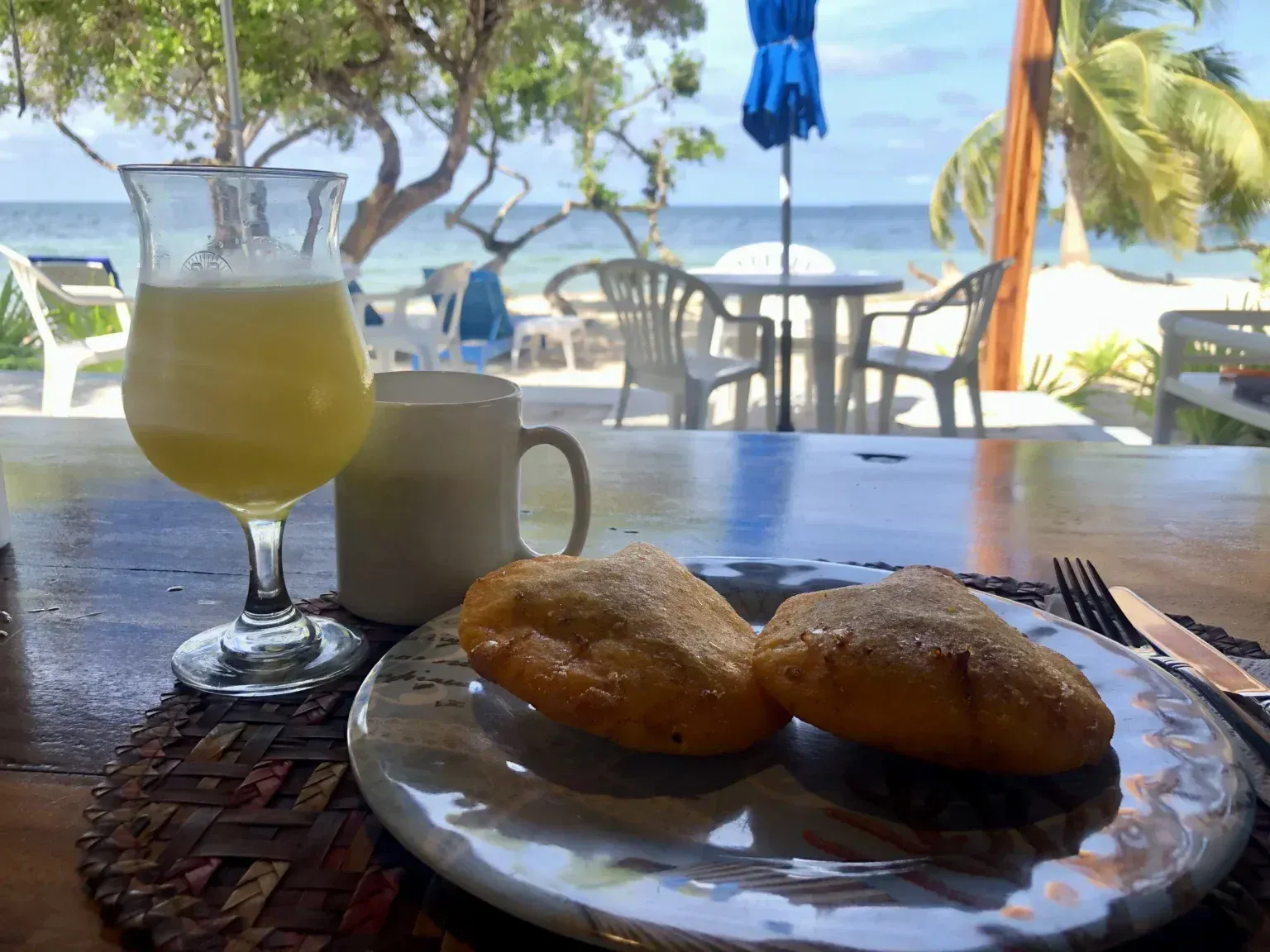
Breakfast examples include arepas, scrambled eggs or eggs with tomato and onion, tropical fruit and coffee. The practical benefit is gathering to eat at the house without organising another boat journey for every meal. Discuss timing and preferences so preparation fits your plans for the day.
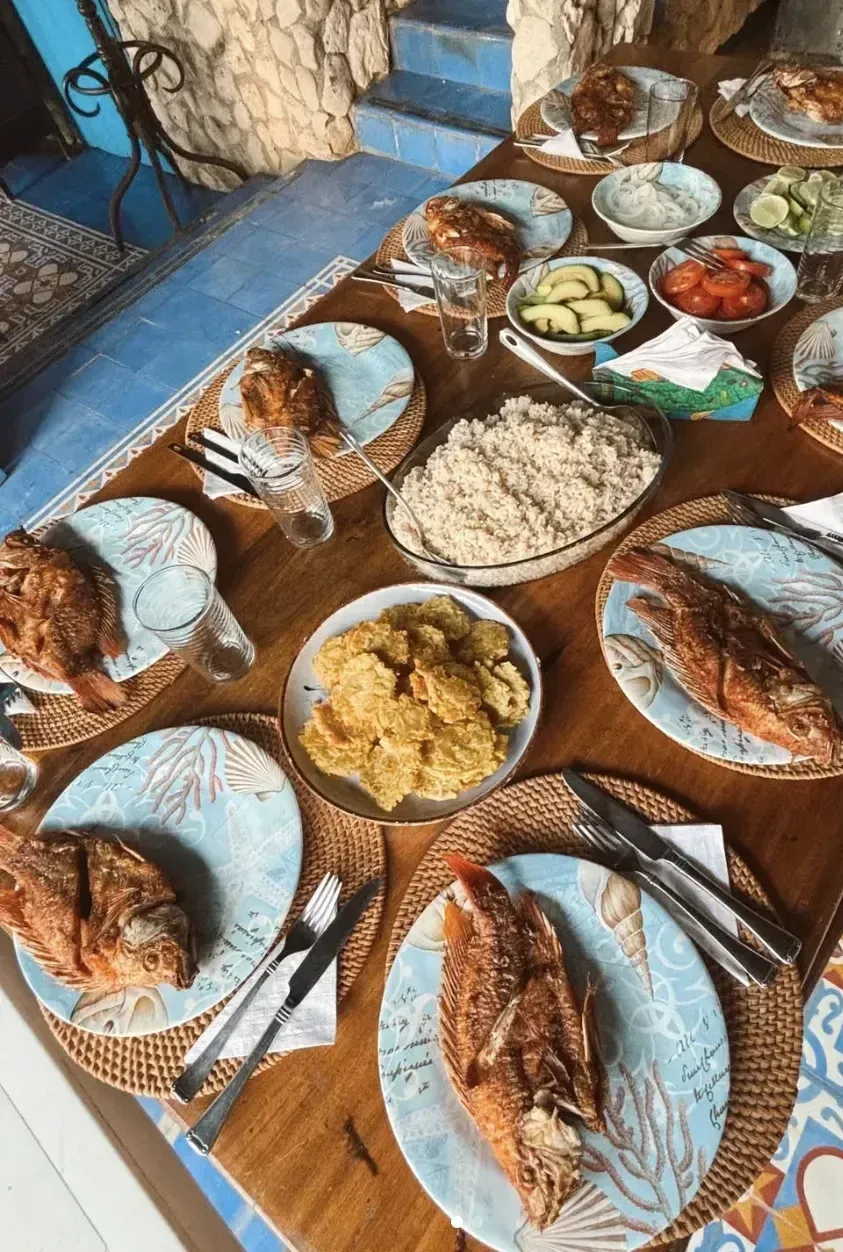
The photographs show actual food served here, rather than another venue’s sample menu. Our house menu gives examples. A dish list helps you picture the food; the advance agreement establishes what will be prepared during your stay.
What to explain before choosing dishes
Tell us about allergies, restrictions, ingredients someone avoids and children’s particular preferences. A vegetarian group and a person unable to eat a specific ingredient require different conversations. Precise information helps us review possible preparations and how to organise them.
If food is central to a family gathering, raise it in the initial request. Arrival lunch is late to mention a requirement the team needed before shopping and preparation. We will agree the options we can accommodate for your particular group.
Basic or Full: what changes?
Basic Experience includes accommodation and an equipped kitchen for self-catering. Meals are excluded. Buy groceries in Cartagena before travelling: plan breakfasts, lunches, dinners and anything your party wants between meals, with quantities for every person.
Make one shopping list for the entire stay and divide it between those buying supplies. When every household brings “something”, it is easy to duplicate ingredients and overlook a complete meal. Remember that bags, coolers and bulky items need to be included in the luggage discussion before travel.
Full Experience adds a cook and all meals from arrival lunch through departure breakfast. It makes it easier to organise beach time, reading or kayaking without assigning cooking turns. You should still agree the meals and mention any plans to be away from the house during service.
Meal rates per night
- Adults: COP 150,000 per person per night.
- Children aged 5–17: COP 100,000 per person per night.
- Children under five eat free.
Give each child’s age, not only the total number of children. Two six-person parties may have different food components because of their ages. Accommodation comes from the stay enquiry for your dates, rather than multiplying a meal rate.
For two or more nights, the Barú village round-trip boat is included. For one night, Basic adds COP 300,000 per group, while Full incorporates that transport cost once in its total. Cartagena transport is separately quoted.
Exactly which meals do two nights cover?
House check-in is 11:00 and checkout is 08:00. These times explain why the first meal is lunch and the final meal is breakfast. For two nights, the sequence is:
| Visit day | Meal service |
|---|---|
| Arrival | Lunch and dinner |
| Middle day | Breakfast, lunch and dinner |
| Departure | Breakfast |
Food is charged for two nights, not three full days. The middle day has all three meals; arrival and departure complement each other. Departure breakfast should not be interpreted as an extra morning of house use.
For example, four adults staying two nights have COP 1,200,000 in meals. A ten-year-old adds COP 200,000, while a three-year-old’s food is free. Total meals would be COP 1,400,000, in addition to date-dependent accommodation. Our budget guide shows that example with transport kept separate.
Keep travel and food plans aligned
Coordinate arrival for the agreed time and tell us about delays. Avoid assuming lunch in Cartagena as well as the planned house lunch without discussing your schedule. If you will be away for an activity, mention it when arranging service so everyone knows where guests will be.
For a one-night visit, the sequence runs from arrival lunch and dinner to departure breakfast. A day trip has a different proposal, reviewed through the beach-day page. These nightly rates should not be used to calculate an event lunch.
Drinks, allergies and preferences
The food-package menu mentions natural juices and non-alcoholic drinks. There is also a separate drinks list. Confirm which drinks and extras your proposal covers, in what quantities, and what is paid separately. A photograph of a table cannot define those details.
The house is in Punta Piedra, and the final approach is always by boat. Sorting out food and transfers beforehand lets you bring what you need without depending on finding ingredients on arrival. For a group, send one list of restrictions and preferences checked by everyone.
Tell us your dates, adult numbers, children’s ages and whether you want to cook or have meals prepared. We can then review a practical plan. The useful choice is not simply a package name: it is knowing how you will eat from arrival through the breakfast before you leave.