

A beach house works for a small group when three decisions are settled before travel: who sleeps where, how you will eat and how to share the complete cost. Privacy matters, but it does not replace organisation. Two families of four and four couples need different sleeping arrangements even though the headcount is identical.
In Barú, add another question: how everyone reaches the property with their luggage. When the final leg is by boat, shopping, pushchairs and different arrival times need coordination. This guide is about planning the stay together, rather than simply finding a house advertising enough places.
Agree the sleeping plan first
Make a list of names, children’s ages and who needs to share a room. Include couples wanting a shared bed, people needing separate beds and any difficulty with stairs. Then request the actual house layout and compare the two lists.
Casa Gaviota has three bedrooms and three bathrooms and sleeps up to ten. The upstairs bedroom opens onto the sea-view balcony; the north and south rooms are downstairs. Confirm current beds before assigning rooms. Photographs help you recognise the spaces, but they are not an accommodation list.
Separate visitors from overnight guests
The house and beach are exclusive to one group. If extra relatives will visit during the stay, mention that in the request. We can welcome up to thirty for day events, but that does not increase the ten-person overnight capacity. Explain who arrives, eats lunch, takes the return boat and stays overnight.
This prevents food, transport and bedrooms being organised from three different lists. When someone changes plans, update the shared list rather than telling only one household.
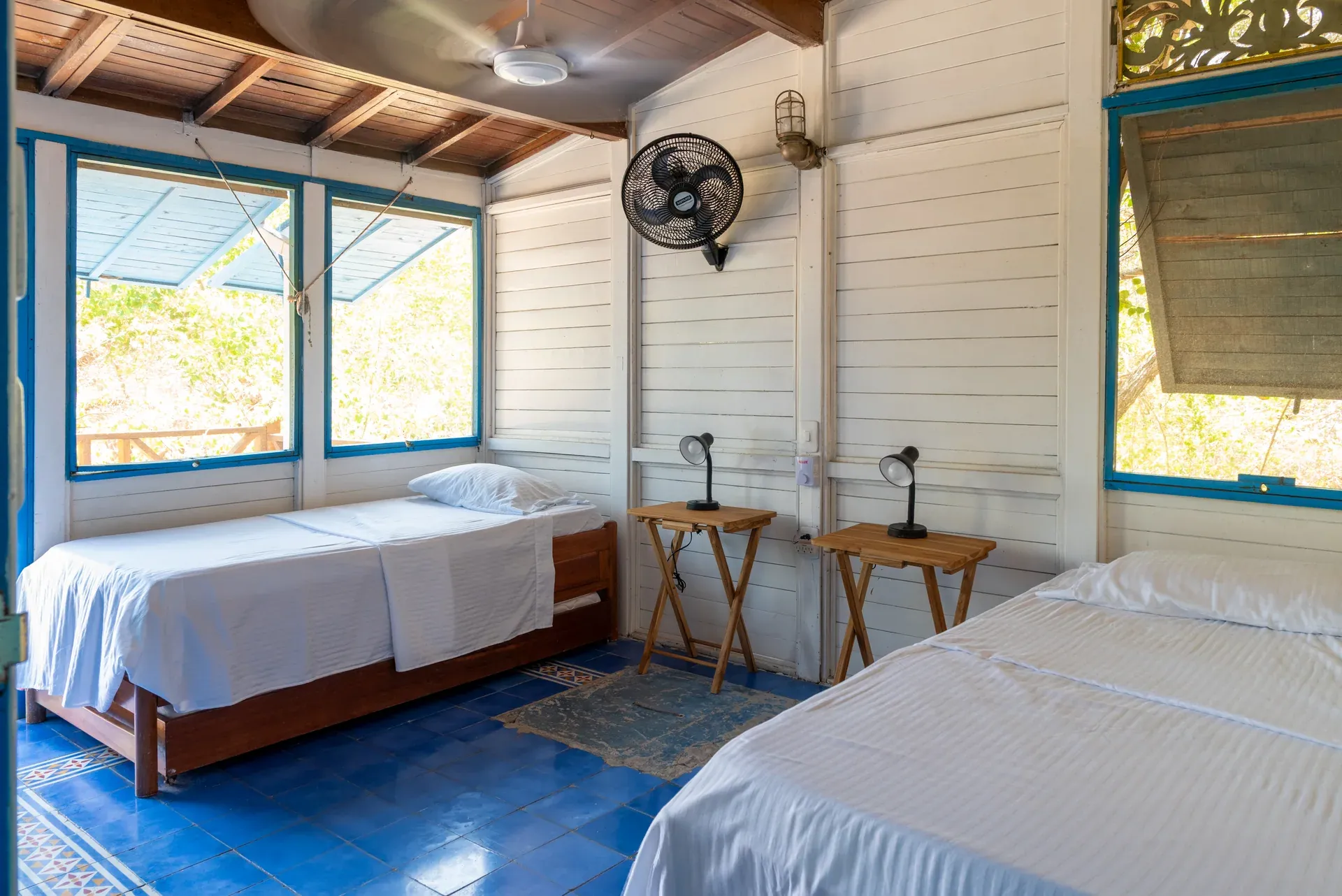
What everyone sleeping here should know
All bedrooms have fans; there is no air conditioning. Showers use natural-temperature fresh water without a heater. Share these conditions with everyone, particularly someone who never read the listing and simply accepted an invitation.
Every bed has a mosquito net, renewed annually. Bring repellent. Land crabs moving outside at night are harmless. Manuel looks after the property, lives fifty metres away and is there at night. Daily cleaning covers surfaces and common areas.
Spend time together without one shared activity
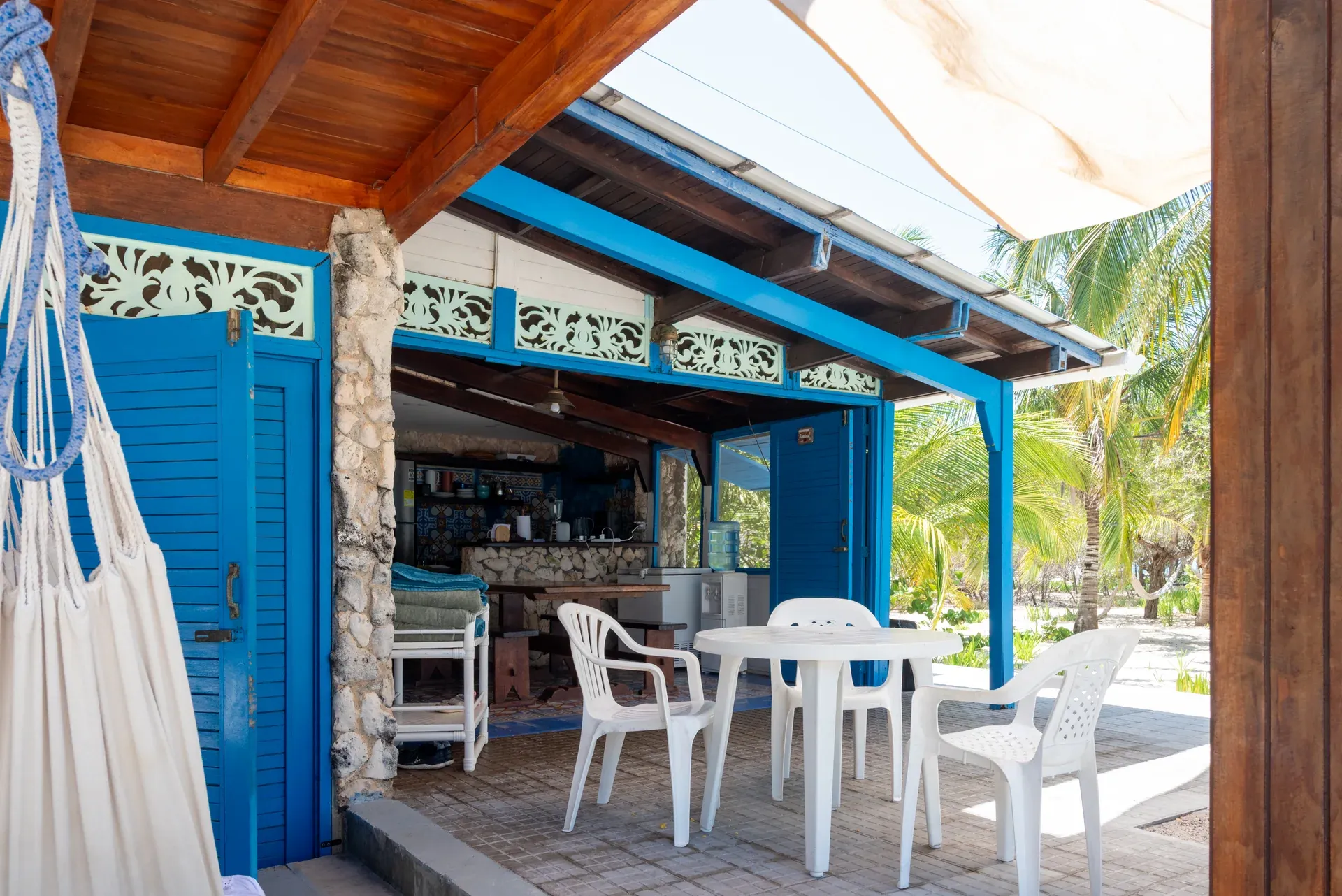
A whole house gives you gathering points and separate spaces. Here there are open-air living and dining areas, terraces, a balcony and hammocks; the beach is around eighty metres long and has no vendors. You can come together for meals without spending every hour on the same activity.
Agree practical responsibilities: who supervises children near water, how to organise kayak use and what someone sleeping early needs. “Everyone is on holiday” should not become an assumption about care. Discussing it beforehand helps prevent one person being left responsible for everything.
Music deserves a conversation within the group too. There is a Soundboks speaker at the house, and a papayera band is possible for a celebration. Ask about availability and arrangements before adding it to the plan. Exclusive use does not isolate the setting: boats and neighbouring properties may be audible.
Starlink with battery backup is available. Someone needing to connect can do so while others read or swim. You do not have to choose between a formal phone-free retreat and working all day. People can organise their time without requiring one activity for everyone.
Decide meals as a group
The useful question is not who volunteers to cook, but how every meal will be covered. Basic Experience provides accommodation and an equipped kitchen. Buy groceries in Cartagena before travelling. Use one list for breakfasts, lunches and dinners, accounting for ages, dietary needs and quantities.
It also helps to divide preparation and organisation. When households shop without coordinating, the same things can be duplicated while something else is missed. Include those purchases in the luggage declared for transport. Supplies for ten people take more space than supplies for a couple.
With Full, the cook prepares meals from arrival lunch through departure breakfast. For two nights, that means arrival lunch and dinner, three meals on the middle day and departure breakfast. Food is charged for two nights rather than three complete days.
Children, preferences and dietary needs
Meals cost COP 150,000 per adult per night and COP 100,000 per child aged five to seventeen; under-fives eat free. Give exact ages to avoid a budget based on assumptions.
Send one list of allergies and preferences checked by all households. Our food and meal-service guide helps start the conversation: examples include fish with coconut rice and patacones, chicken with potatoes or shrimp dishes, according to the agreed menu. Important restrictions need reviewing before ingredients are bought.
Make the budget easy to share
Accommodation covers the entire house and varies with dates. Request the current amount through Check dates, then decide whether to divide it by adult or household. This is an agreement among your party; it does not turn the property into separately sold rooms.
Calculate food by age and night, then add agreed transport. For two or more nights, the Barú village round-trip boat is included. One night in Basic adds COP 300,000 per group; Full incorporates it once. Cartagena is separately quoted. Our budget guide gives an example without inventing an accommodation figure.
Settle arrival and return arrangements
Check-in is 11:00 and checkout is 08:00. Two nights provide a full middle day; a single night means preparing to leave the next morning. Boats do not run after dark, and the last approach to the house is always by water, using the dock.
Nominate one person to coordinate passengers, luggage and schedule changes. For a day-only visit, use the day-trip request. With sleeping plans, meals, transfers and expenses settled, the group can arrive knowing how the visit works instead of solving everything while disembarking.